
As your friendly companions at Vietnam Adventure, we know that sometimes the most heartwarming connections are made through the simple act of sending a letter. Whether you’re reaching out to a loved one, a new friend made during your travels, or conducting business, knowing how to address a letter to Vietnam is essential for ensuring your message arrives safely. The most crucial elements for addressing a letter to Vietnam are: Recipient’s Full Name, House Number and Street Name, Ward/Commune, District/City, Province/City, and the Country (VIETNAM). Always write the destination country in capital letters on the last line.
Unveiling the Art of Addressing: Your Guide to Vietnamese Mail
Imagine the gentle rustle of a letter arriving, carrying your thoughts across oceans to the vibrant landscapes of Vietnam. To make this happen, understanding how to address a letter to Vietnam is your first step. It’s more than just an address; it’s a bridge to connection, a small piece of your world traveling to another. Let’s explore the nuances of how to write address in Vietnam, ensuring your words find their way home.
The Essential Elements of a Vietnamese Address
The structure of a Vietnamese address might seem a little different from what you’re accustomed to, but with a few key pointers, it becomes wonderfully straightforward. Think of it as painting a picture, layer by layer, starting with the specific and moving to the general.
- Recipient’s Full Name: Always begin with the full name of the person or entity you’re sending the letter to. Clarity here is paramount.
- House Number and Street Name: This is your immediate identifier. In Vietnam, street numbers can sometimes include suffixes like “hẻm” (alley) or “ngách” (small alley), which are vital for precise delivery. For instance, 123/45 Lê Lợi would mean house number 123, in alley 45 off Lê Lợi Street.
- Ward/Commune (Phường/Xã): This is the next level of detail, a smaller administrative division within a district or city. It helps narrow down the location significantly.
- District/City (Quận/Thành phố): Whether it’s a bustling district in Ho Chi Minh City or a smaller town, this specifies the broader urban or rural area.
- Province/City (Tỉnh/Thành phố): Vietnam is divided into provinces and centrally-governed municipalities (which are treated like provinces). This is a crucial geographical identifier.
- Country (VIETNAM): Always, and we mean always, write VIETNAM in all capital letters on the very last line. This immediately signals to international postal services its final destination.
Let’s look at an example to bring this to life. Imagine sending a postcard adorned with a picture of Ha Long Bay to a new friend in Hanoi:
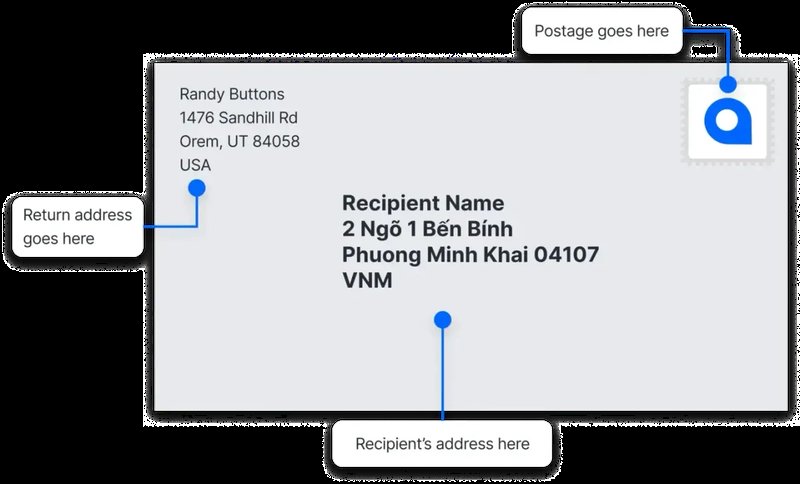
| Line | Information | Example |
|---|---|---|
| 1 | Recipient’s Full Name | MR. NGUYEN VAN AN |
| 2 | House No. and Street Name | 123 Cầu Giấy |
| 3 | Ward/Commune | Phường Quan Hoa |
| 4 | District/City | Quận Cầu Giấy |
| 5 | Province/City and Postal Code (optional but helpful) | Hà Nội 100000 |
| 6 | Country | VIETNAM |
Understanding Vietnamese Address Nuances
The beauty of Vietnam lies in its unique character, and its addressing system is no different. When you’re learning how to write vietnam address, a few cultural and structural points can be incredibly helpful.
Alleys and Sub-Alleys: The Heart of Local Life
Many Vietnamese addresses feature numbers separated by slashes. These indicate alleys and sub-alleys, known as “hẻm” or “ngõ.” For instance, “123/45/67 Nguyễn Huệ” means house number 67, located in alley 45, which is off the main alley 123 on Nguyễn Huệ Street. These are not just numbers; they represent the intricate, bustling veins of Vietnamese urban life. Missing these can mean your letter gets lost in the labyrinth of charming streets.
The Importance of Accent Marks
While postal services generally manage without them, including Vietnamese accent marks in street names and place names (if you know them) can aid local postal workers. It demonstrates respect and precision, though it’s not strictly mandatory for international mail.
Postal Codes: A Helpful Addition
While often not strictly required for international mail to Vietnam, including the correct 6-digit postal code (mã bưu chính) for the recipient’s area can significantly expedite delivery. You can often find these by doing a quick online search for the specific city or province.
Preparing Your Envelope for Its Journey
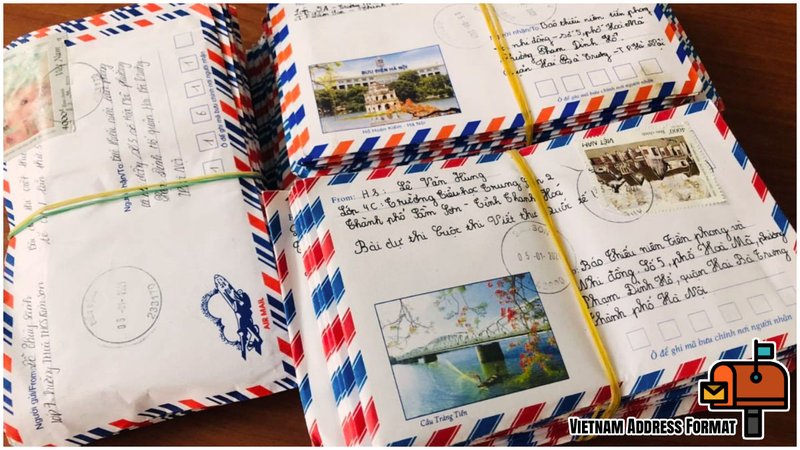
Beyond knowing how to address a letter to Vietnam, preparing the physical envelope correctly is vital. Think of your envelope as a tiny, intrepid traveler itself, making its way through different hands and machines.
Sender’s Address: Your Return Ticket
Always include your full return address in the upper left-hand corner of the envelope. This ensures that if for any reason the letter cannot be delivered, it can be returned to you. This includes:
- Your Full Name
- Your House Number and Street Name
- Your City, State/Province, and Postal Code
- Your Country
Postage: The Fuel for the Journey
Calculating and applying the correct international postage is crucial. Visit your local postal service’s website or office to confirm the current rates for letters to Vietnam. Factors like weight and size will influence the cost. Ensure you use enough postage to avoid delays or returns.

Tips for a Smooth Mail Experience to Vietnam
Clarity and Legibility are Key
Write clearly and legibly, preferably in block capital letters, especially for the destination address. If your handwriting isn’t the clearest, consider printing the address. Ambiguity is the enemy of efficient mail delivery.
Secure Your Contents
Ensure any contents are well-protected within the envelope. If you’re sending photos or anything that could be bent, use a sturdy envelope or add a piece of cardboard for support.
Consider Tracking for Important Letters
For truly important documents or cherished correspondence, consider using a tracked or registered mail service. While more expensive, it provides peace of mind and allows you to monitor your letter’s progress on its journey to Vietnam.
Frequently Asked Questions about Addressing Letters to Vietnam
Does the postal code have to be included when addressing a letter to Vietnam?
While not always strictly mandatory for international mail, including the 6-digit postal code (mã bưu chính) for the specific area in Vietnam is highly recommended. It helps immensely with internal sorting and ensures more efficient delivery within Vietnam.
What if I only have a street name and not a specific house number?
It’s challenging to deliver mail accurately without a house number. If you only have a street name, it’s very likely your letter will be undeliverable. Try to obtain the full, specific address, including the house number and any alley information (hẻm/ngõ), before sending.
Is it better to write the address in English or Vietnamese?
For international mail, writing the address in English, clearly and legibly, is generally sufficient and often preferred by postal services outside Vietnam. However, ensuring the Vietnamese place names (street, ward, district, province) are spelled correctly in English is important. If you can provide the address in both English and Vietnamese, that can offer an extra layer of clarity for local postal workers, but is not essential.
How long does it typically take for a letter to reach Vietnam?
Delivery times can vary significantly depending on the origin country, postal services used, and customs processing. Generally, airmail letters from North America or Europe to Vietnam can take anywhere from 10 days to 3 weeks, and sometimes longer during peak seasons or due to unforeseen delays.
Do I need to include the recipient’s phone number on the envelope?
Including the recipient’s phone number on the envelope is not typically required for standard letter mail. However, for parcels or if you think the recipient might be hard to locate, writing a small note with the phone number on the back or inside the letter can be helpful for the local post office to make contact if needed.
Your Words, Our World: Connecting Through Mail
Sending a letter is a timeless gesture, and we hope this guide on how to address a letter to Vietnam has empowered you to share your stories, memories, or simply a warm greeting across the miles. Each letter you send is a whisper carried on the wind, a thread connecting hearts. From the bustling streets of Hanoi to the tranquil rice paddies of the Mekong Delta, your message will find its way, thanks to these simple steps. For more insights into the culture, landscapes, and adventures that await, remember to explore Vietnam Adventure. Happy writing!